
An investor pitch, a board presentation and a five-minute update to senior leadership each call for a different level of preparation. To understand how to prepare for a high-stakes presentation, begin 7-10 days ahead: clarify what you want the audience to decide or do, shape one central message and rehearse it aloud. Preparation gives you a clear route through the material, so you can focus on the people in the room rather than trying to remember every line.
You already know the stakes can be high. A presentation may influence an investment, a major contract, a project decision or how colleagues see your leadership. The pressure is real, but it doesn’t have to dictate your delivery. A focused plan helps you communicate clearly and respond to your audience as the moment unfolds.
Here, you’ll learn why preparation matters, how to sharpen your message and call to action, and how storytelling and interaction can make your ideas more engaging. You’ll also see how your approach can change with the situation, from a short leadership update to a pitch or keynote, and how to turn rehearsal into confident, audience-centred delivery.
Key Takeaways
- Shape your presentation around the audience’s needs, using a relevant story or thoughtful interaction to make your ideas resonate.
- Use simple breathing and movement techniques to steady yourself and stay present when pressure rises.
- Distil your central message and make the audience’s next step clear, so your presentation leads somewhere purposeful.
- Adapt your preparation to the stakes and format, whether you’re pitching an idea, addressing a board or delivering a keynote.
Engaging audiences through storytelling and interaction
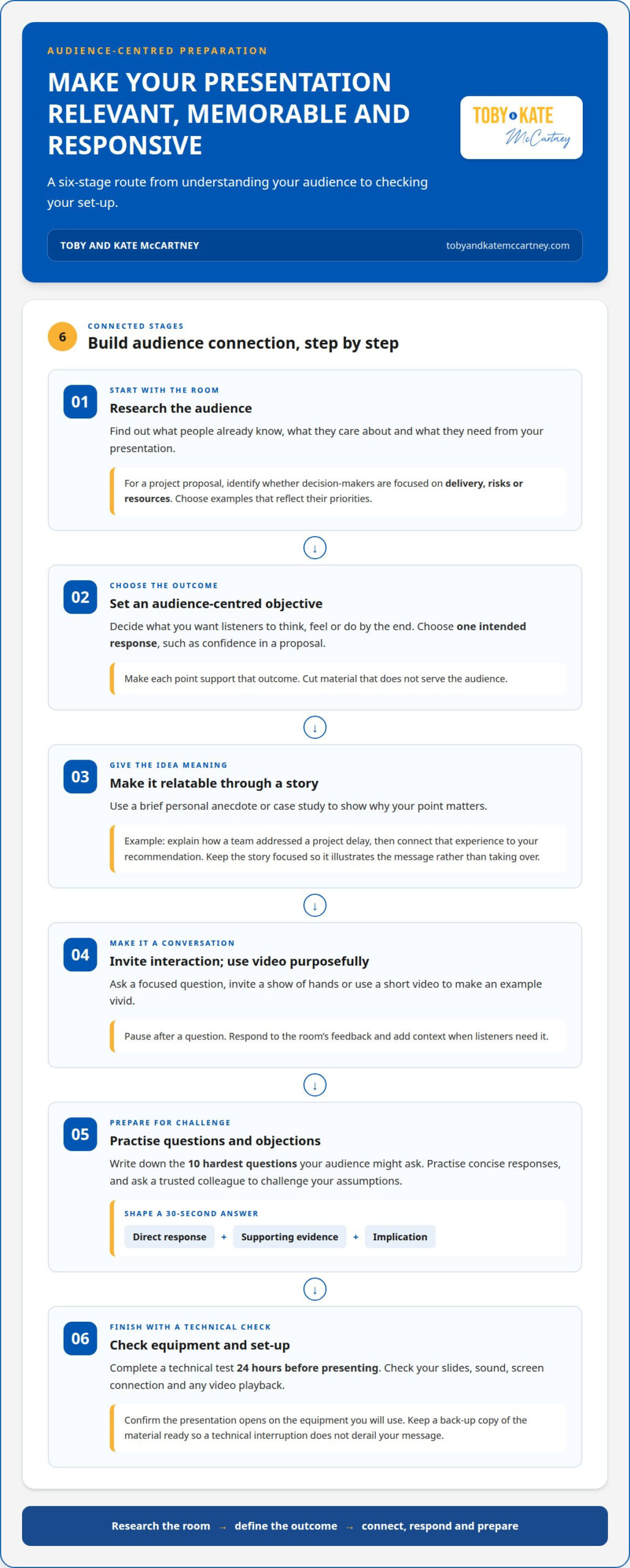
Use these six steps to make your material relevant, memorable and responsive, whether you’re pitching a project or addressing a leadership team.
- Research the audience. Find out what people already know, what they care about and what they need from your presentation. For a project proposal, identify whether decision-makers are focused on delivery, risks or resources. Choose examples that reflect their priorities, not just your expertise.
- Set an audience-centred objective. Decide what you want listeners to think, feel or do by the end. Choose one intended response, such as confidence in a proposal, then make each point support that outcome. This gives your presentation focus and helps you cut material that doesn’t serve the audience.
- Make the idea relatable through a story. Use a brief personal anecdote or case study to show why your point matters. For example, explain how a team addressed a project delay, then connect that experience to your recommendation. Keep the story focused so it illustrates your message rather than taking over the presentation.
- Invite interaction and use video purposefully. Ask a focused question, invite a show of hands or use a short video to make an example vivid. Treat the presentation as a conversation, not a memory test. Pause after asking a question and respond to the room’s feedback, adding context when listeners need it.
- Prepare for challenging questions and objections. Write down the 10 hardest questions your audience might ask, then practise concise responses. A trusted colleague can act as a mock audience and challenge your assumptions. Structure a 30-second answer around a direct response, supporting evidence and its implication.
- Check your equipment and technical set-up. Complete a technical test 24 hours before presenting. Check your slides, sound, screen connection and any video playback, then confirm that your presentation opens on the equipment you’ll use. Have a back-up copy of the material ready, so a technical interruption doesn’t derail your message.
Why Is Preparing for a High-Stakes Presentation So Important?
Manage nerves with movement, controlled breathing and rehearsal. Before speaking, focus on your audience and message. If anxiety rises during the presentation, pause, breathe and return to your next point.
- Move before you present. If possible, spend 30 minutes walking or doing gentle physical activity beforehand. Movement gives you a practical way to release tension before an executive briefing or important pitch. Choose an activity that leaves you feeling alert, not rushed.
- Use a simple breathing pattern. In the 10 minutes before speaking, try four-second inhales, holds, exhales and holds. Repeat the cycle four to five times. Keep your shoulders relaxed and let each breath create a steady rhythm.
- Ground yourself five minutes before starting. Take three slow breaths, inhaling for four counts and exhaling for four. Feel your feet on the floor. This brief reset brings your attention back to the room instead of imagined mistakes.
- Reframe the energy. Ten minutes before presenting, describe your nerves as excitement about sharing an important idea. Then spend five to 10 minutes visualising a clear opening, engaged listeners and a confident close. Keep the image realistic and focused on what you can control.
- Rehearse aloud, not silently. Practise your presentation aloud at least five times. Speaking through the material helps you notice where you stumble and become more familiar with its flow. Use a timer and practise standing, as you will during the presentation.
- Recover calmly if your mind goes blank. Pause, take a breath and return to your main message or the next point in your outline. For example, say, “The key point is…” and explain the idea in plain language. A deliberate pause gives you time to think and helps listeners follow.
Clarifying the main message and call to action
If you’re deciding how to prepare for a high-stakes presentation, start with the audience’s desired outcome. Use these steps to build a focused argument and define a clear next action.
-
Tailor the presentation message
Match your recommendation to the audience’s decision. A board considering a project needs to understand its implications, risks and required action; a team briefing may call for practical changes to daily work. State why the presentation matters now. Don’t include background just because you know it or have already prepared it.
-
Develop a single clear message
Write one sentence that captures your central point and intended outcome. For example: “Approve the pilot so the team can test this approach before wider rollout.” Check that your recommendation makes sense without slides. State the core message within 90 seconds, giving listeners a clear destination before supporting details begin.
-
Build a thesis-led message structure
Put your main claim first, then arrange three to five supporting ideas in a logical sequence. Each idea should strengthen the same argument, not introduce a competing message. Connect evidence to the decision you’re seeking: explain what a finding means and why it matters. Close by restating your recommendation and its next step.
-
Audit slides and sharpen the message
For how to prepare for a high-stakes presentation, make every slide support your central claim. Remove details that distract, and replace dense text with a clear point or useful visual. Reserve one to two minutes for the call to action, stating who should do what next. Lock slides 48 hours before presenting, then focus on delivery.
If slides, audio or other technology fails, pause and continue with your spoken argument. Summarise the affected visual in plain language, then move to your next point. Keep key messages available offline, so a technical fault doesn’t stop you explaining your recommendation and desired outcome.
Examples of high-stakes presentation scenarios
Different situations call for different preparation. Match your approach to the decision, audience and pressure attached to the moment.
- Investor pitch: Lead with the opportunity, then connect your evidence to the investment decision. Keep financial and market details relevant to the questions investors need answered. A compelling story can support the business case, but it doesn’t replace it.
- Job interview presentation: Build your case around the role’s requirements. Use a specific example to show how you solved a relevant problem, then explain the result and your contribution. Rehearse transitions so nerves don’t rush your answer or obscure your judgement.
- Major-client sales pitch: Centre the presentation on the client’s priorities, not a catalogue of features. For example, connect a proposed service to a challenge the client has raised. Use direct language and make the decision or next step clear before the final minute.
- Crisis briefing: Put confirmed information and immediate actions first. Separate what has happened from what remains uncertain, and avoid speculation. A calm, precise explanation helps people understand their responsibilities and next steps when the room is under pressure.
- Academic defence: State your central argument, then show how your evidence supports it. Be ready to explain your method and acknowledge the limits of your work. Practise answering challenging questions in clear language, rather than relying on specialist terms alone.
- Conference keynote or product launch: Shape a keynote around one memorable idea; use a launch demonstration to show what the product does. In either format, make visuals support the spoken message. Test the sequence and timing so a demonstration strengthens your delivery instead of interrupting it.
Use the scenario to decide what to emphasise, what to leave out and which questions to expect. To strengthen your delivery across pitches, briefings and keynotes, build your public-speaking skills.
Toby and Kate McCartney
Toby and Kate McCartney help you strengthen the communication skills behind a confident, audience-focused presentation. Their Public Speaking programmes develop delivery, while leadership training helps you communicate ideas and influence decisions at work. For broader personal and professional development, they also offer NLP Practitioner Certification, NLP Master Practitioner Certification and NLP Trainer Training.
Choose their training when you want to build presentation skills beyond preparing for one event, whether you’re addressing colleagues, presenting a proposal or taking on a more visible leadership role. Explore the programme that best fits your development goals and the communication skills you want to strengthen.
Contact Toby and Kate McCartney to discuss your next step.
Make your next presentation a step forward
Your next presentation can be more than a one-off performance. Treat it as a chance to strengthen how you lead conversations, share ideas and influence decisions. When considering how to prepare for a high-stakes presentation, focus on the capability you want to carry into future opportunities, not just the event ahead.
Progress comes from deliberate practice. Each time you speak, notice what helps you connect with your audience and what you want to develop further. That reflection can guide your next rehearsal and build a stronger foundation for future presentations.
If you’re ready to develop your confidence and communication skills, contact Toby and Kate McCartney to explore a suitable next step. Your voice deserves to be heard. Start building the skills to deliver it with purpose.
Frequently Asked Questions
How Much Should You Rehearse Before a High-Stakes Talk?
Aim for five to seven complete run-throughs across different practice settings. Practise aloud alone three or four times, then use a mirror or camera for two or three sessions. Finish with one or two rehearsals in front of a live audience. This progression helps you move from learning the material to delivering it naturally and responding to listeners.
What Should You Do If You Forget Your Words During a Presentation?
Pause briefly, then express the idea in different words instead of searching for the exact line. A simple bridge such as “The point I want to make is…” can help you regain direction. If the detail isn’t essential, move to your next point. The audience needs your meaning, not a flawless recitation.
What Should You Focus On When Practicing?
Practise clarity, pace, vocal delivery and movement, not just remembering the content. Record a full rehearsal and watch it back. Note where your explanation becomes hard to follow or your pace changes, then choose one adjustment for the next attempt. For example, pause after a key recommendation so listeners have time to absorb it.
What are the essential steps to prepare for a high-stakes presentation?
Start by defining the decision or action you want from the audience. Gather supporting evidence, organise your points into a clear progression and remove material that distracts from your purpose. Prepare for likely objections, practise aloud and plan how you’ll respond if the discussion moves beyond your slides. Finish by making the audience’s next step explicit.
How far in advance should you start preparing for an important presentation?
Start seven to 10 days before the presentation, especially if it involves a major decision or unfamiliar material. Use the early stage to clarify your objective and build the argument; leave time later for rehearsal and refinement. For a short update on familiar work, preparation can be more focused, but allow enough time to test your message and timing.
How do you structure a persuasive presentation for senior leaders or clients?
Organise your presentation around decision-makers’ priorities: state the issue, explain its impact, present relevant evidence, then recommend a clear action. For example, a client proposal could link a service recommendation to a specific challenge and explain its expected benefit. Keep supporting details ready for discussion, but present the core case before the background.