
The strongest coaching package isn’t the one with the most calls; it’s the one shaped around the change your client wants to make. To learn how to create a coaching package, choose a format that fits their needs and your capacity, then define the transformation, duration, sessions and between-session support. One-to-one programmes may run for three, six or twelve months, while group coaching offers a shared pathway for clients working towards a common goal.
A clear structure helps clients understand what they’re committing to, but it should start with listening, not adding more features. This guide explains how to choose between individual and group formats, describe the outcome your package is designed to support, and set practical expectations for sessions and contact between them. You’ll finish with a framework for an offer that feels focused, personal and sustainable to deliver.
Key Takeaways
- Choose a delivery format that fits your coaching style, your clients’ needs and the time you can commit.
- Describe the shift clients want to make, then select methods and resources that support that journey.
- Set a clear rhythm for sessions and between-session contact, with boundaries clients can understand.
- Use one-to-one coaching for tailored focus and group coaching for shared learning around a common goal.
How do I choose between the different package types?
Build your package around the client’s problem, your strongest coaching methods and the way you work best. These steps will help you create a focused offer, rather than simply bundle sessions together.
- Define the target client and problem. Describe who you want to support, what they are facing and what they want to change. According to the UK Government, understand users and their needs before designing content. For example, a package for new managers might focus on preparing for difficult conversations, rather than offering general professional development.
- Set a clear, observable outcome. Describe the progress a client can work towards without promising a guaranteed result. For example, they might practise a presentation and develop a plan for handling questions. Choose tools and resources that support this goal, such as reflection prompts, practice exercises or a progress review. Keep the programme focused.
- Match the format to your working style. Compare one-to-one sessions, group coaching, a monthly retainer or an intensive lasting one or two days. Pick the models you can deliver well and that suit your clients; you don’t need to offer every format. Personalise tools to each person instead of following a fixed script. Ask whether my clients benefit most from privacy, peer discussion or concentrated time.
- Make the agreement clear and ethical. Include scope, fees, session arrangements, responsibilities, confidentiality, cancellation, refunds and how either party can end the agreement. For UK consumer sales, explain the price, service and cancellation and refund terms before commitment; applicable cancellation rights can depend on how the agreement is made and whether delivery has begun. The NHS identifies confidentiality as an important coaching boundary. Explain how client information is handled and what falls outside coaching. These terms help clients understand the package before they sign.
Defining the client transformation and coaching method
Build your package around a clear change clients can work towards. Map the journey, choose your approach and explain the value before discussing fees.
-
Map the client’s before-and-after outcomes
Start by recording the client’s current situation, desired outcome and obstacles between them. For example, a new manager might want to lead challenging conversations with more confidence. Define what progress could look like in observable terms, such as preparing an agenda or practising a response. Use a simple template to review these markers during sessions. Avoid promising an outcome that depends on factors outside your coaching.
-
Define the coaching method
Choose the actions and framework that connect the starting point to the intended change. You might combine guided reflection, practice, feedback and agreed action steps. Make every method serve the client’s goal instead of adding exercises to make the package look fuller. Decide where you’ll coach, teach or mentor, and what resources clients need to apply each insight between sessions.
- Present value before price. Explain the intended progress, your process and what participation involves before discussing the fee. Describe the target client, problem and method clearly on your service page or in an introductory conversation. Share relevant examples without presenting another client’s experience as a guaranteed result.
- Check the fee and your capacity. In the UK, your package price depends on the case and is given after a quote request; weigh preparation, sessions, resources and support. To test capacity, divide your available coaching and preparation time by the workload each client requires. Compare that client capacity with your revenue goal before setting enrolment targets. Give clients focused homework, such as a reflection prompt or a practice task, and review what they learned next session. If personal development would strengthen your coaching approach, explore one-to-one coaching.
Setting package duration, calls and between-session support
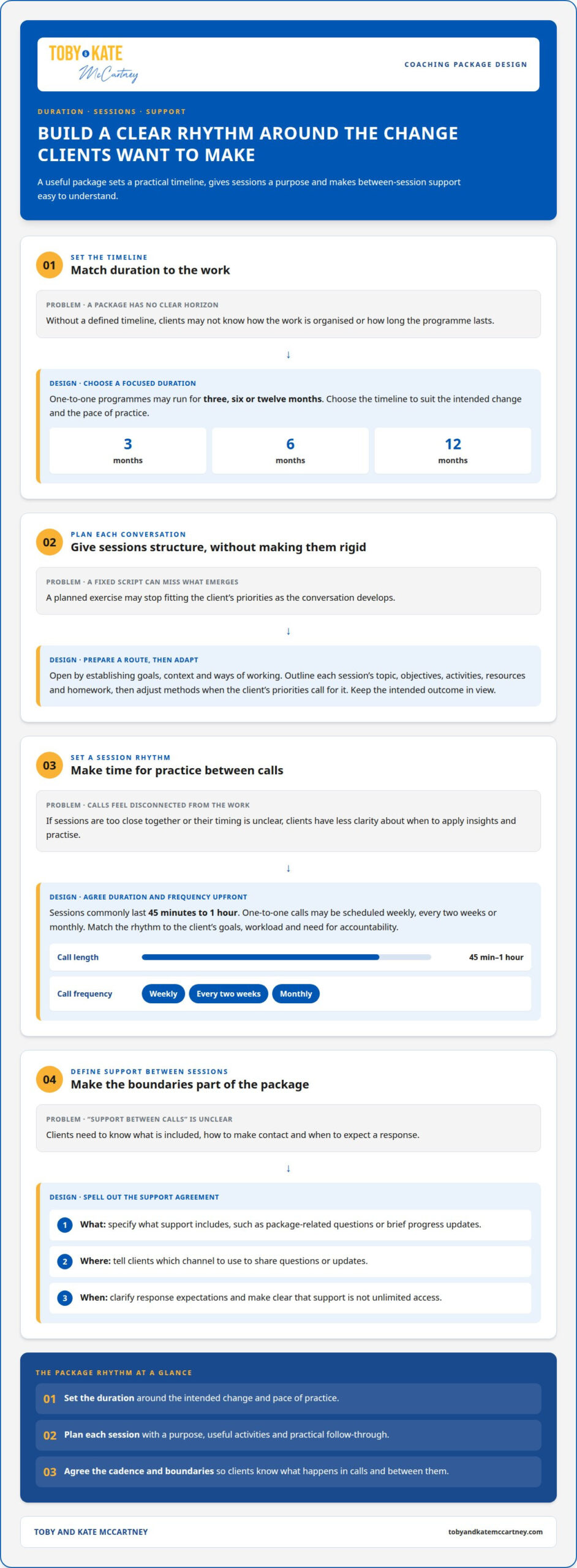
Set the timeline and contact rhythm around the work clients need to do. Include a session plan, useful materials, between-session practice and clear support boundaries.
-
Structure modules, sessions and delivery
Divide the package into stages, each with a purpose and practical outcome. One-to-one programmes may last three, six or twelve months, depending on the intended change and pace of practice. For each session, outline its topic, objectives, key concepts, activities, resources, assessment and homework. Choose a delivery format that supports participation, and make each stage build on the previous one.
-
Balance session structure with flexibility
Plan an opening session to establish goals, context and ways of working. Then use your coaching toolbox to respond to what emerges instead of forcing every conversation through a fixed course. If a planned exercise no longer fits the client’s priorities, adapt it or choose another method. Keep the outcome in view while leaving room for reflection.
-
Set session frequency and duration
Choose a rhythm that gives clients time to apply insights before meeting again. Coaching sessions commonly last 45 minutes to 1 hour, with one-to-one calls scheduled weekly, every two weeks or monthly. Match frequency to the client’s goals, workload and need for accountability. State the call length and schedule upfront so clients can plan their time and practise between sessions.
-
Plan between-session support
Specify what support includes, which channel clients should use and when you’ll respond. For example, set a clear way for clients to share questions or brief progress updates between calls. Explain that support covers package-related actions, not unlimited access, and clarify response expectations. This creates a reliable structure for clients while protecting time for preparation, delivery and other responsibilities in your coaching business.
Individual and group coaching formats
Choose the format that supports the work, your delivery strengths and your clients’ learning needs. It should be practical to run and straightforward to explain.
- Use one-to-one coaching for individual focus. This format suits clients whose goals, circumstances or pace call for tailored attention. You can shape sessions around their priorities and adjust activities as new challenges emerge. For example, a manager preparing for a difficult conversation may benefit from private practice and feedback. Account for the preparation each person needs, not just the time spent in sessions.
- Choose group coaching for a shared goal. A group works best when participants face a related challenge and can learn from each other’s perspectives. One example is a programme helping new leaders practise communication and exchange approaches. A sample signature group programme runs for 12 weeks and is limited to 8-10 members. Set participation expectations so every member has room to contribute.
- Compare the delivery demands before committing. Group programmes generally require more setup, marketing and automation than one-to-one packages. Plan how you’ll enrol participants, share resources, guide discussions and maintain progress between meetings. Individual coaching usually involves more tailored delivery for each client. Choose a format you can deliver consistently, rather than adding options simply to attract more clients.
- Test your format with a focused offer. Master one-to-one coaching before building a group programme; this helps you refine the process and understand recurring client needs. Then use those insights to decide whether a shared format could help participants achieve a common outcome. If personalised support is central to your work, explore one-to-one coaching as a practical next step.
Toby and Kate McCartney: NLP Practitioner Certification
Toby and Kate McCartney’s NLP Practitioner Certification can help you strengthen the communication and coaching skills behind your offer. It may suit you if you’re building a coaching practice and want to develop your approach to supporting clients’ personal or professional growth.
For further development, consider the NLP Master Practitioner Certification. Public Speaking programmes can help you communicate with greater impact, while NLP Trainer Training is relevant if you want to build your skills in delivering NLP training. Choose the pathway that aligns with your goals and the clients you aim to serve.
If you’d like to explore your next step, visit tobyandkatemccartney.com.
Put your coaching vision into action
Your first package is a foundation for thoughtful, client-centred work, not a script you have to follow forever. As you coach, notice the questions clients bring, the actions they take and where they need more guidance. Use those insights to refine your approach while keeping the intended change at its centre.
Creating a coaching package means turning what you know into a purposeful experience clients can understand and engage with. Keep developing your own practice, too. Stronger communication and a deeper understanding of people can help you guide clients through meaningful change.
If you’re ready to develop your coaching skills and explore a suitable next step, contact Toby and Kate McCartney. Your next step can start with a clear conversation about the direction you want to take.
Frequently Asked Questions
Should I have more than one type of package?
You can offer more than one package if each serves a distinct need. A private option, for example, could suit clients who need personal attention, while a group programme could bring together people tackling a shared challenge. Start with the offer you can deliver confidently. Add another only when you can explain who it suits and how the experience differs.
Should I list prices on my website?
Show prospective clients what the fee covers and how payment is arranged. A fixed-scope package can display its price directly, while a tailored offer may need an individual quote. Explain what shapes the fee, such as preparation, session time and included resources. Make it easy for readers to understand what they’re paying for and what the package includes.
Should you offer payment plans?
Payment plans can make a package easier to budget for, provided you explain the terms before enrolment. State the total fee, each instalment’s due date, accepted payment methods and what happens if a payment is late. Weigh the administration against the benefit to clients. Align the payment schedule with delivery so both parties know what to expect throughout the programme.
What is a coaching programme?
A coaching programme is a planned series of activities designed to help a client work towards an outcome. It may combine conversations, reflection, practice and agreed actions, rather than relying on a single appointment. For example, a career-focused programme might help someone clarify their direction, prepare for interviews and review progress. Make its purpose and boundaries clear to participants.
How many coaching sessions should a package offer and how long should they last?
Set the session count according to the work required, then give clients a clear schedule. One example is a starter package with six bi-weekly strategy calls over three months. A coaching session commonly lasts 45 minutes to one hour, but the conversation’s purpose should shape its agenda. Build in time to agree actions and review progress, rather than filling every minute with discussion.
How should I structure coaching sessions, support between sessions and resources?
Give each session a clear focus, then record decisions and the client’s next action in a concise recap. Share resources that support that action directly, such as a worksheet for preparing a conversation. Explain how clients can raise questions between sessions, which channel to use and when you’ll respond. This connects each coaching conversation to practical follow-through and keeps support expectations clear.