
Your reputation is being shaped by your leadership, whether you define it or not. The practical answer to how to develop your personal brand as a leader is to identify the values, strengths and purpose you want to be known for, then reflect them consistently in your decisions, communication and relationships. Share enough of your personality to build genuine connection, while keeping personal details that don’t serve that purpose private.
Leadership is about more than what you achieve. How you listen, make decisions and support your team shapes the trust and confidence people place in you. Your personal brand brings those behaviours into focus, helping others understand what you stand for and what they can expect from your leadership.
This guide explains what personal branding means, how to choose what to share and how to make your brand reinforce your leadership rather than feel like a separate performance. You’ll work through practical steps to clarify your distinctive contribution, express it authentically and keep your public presence aligned with the leader you want to be.
Key Takeaways
- Use a focused self-assessment to identify the strengths, values and ambitions you want your leadership reputation to reflect.
- Bring personality and purpose into your professional presence by sharing details that help people understand how you lead.
- Build a simple brand management plan so your words, actions and online presence send a consistent message.
- Use your brand to guide how you communicate, make decisions and build trust with your team.
What Is Leadership Branding and Why Does It Matter?
Define your leadership values by identifying what guides your decisions, where your strengths create value and what motivates you. Your distinctive point of view takes shape where those strengths and values meet your goals. Align your brand with your organisation by connecting those priorities to its values and goals, then demonstrating that connection through your actions.
- Review feedback, recent decisions and moments when you performed at your best. Note the strengths you used, the values behind your choices, the work that energised you and the goals you pursued. For example, if colleagues rely on you to explain complex changes clearly, communication may be a distinctive strength to develop.
-
Define your leadership purpose and goals
Set a purpose that describes the contribution you want to make, then choose goals that put it into practice. Simon Sinek’s Why, How, What model can help: explain why your work matters, how you lead and what outcomes you aim to deliver. Check that each goal reflects your values, not simply a title or status.
- Clarify how you want colleagues to perceive you, then compare that intended reputation with their actual experience. Ask trusted peers for specific examples of your impact, such as how you handle disagreement or support a team through change. Use any gap between their feedback and your intentions to refine your strengths and leadership message.
-
Communicate your brand to colleagues
Show your values and strengths through relevant examples in team conversations, decisions and feedback. Connect your priorities to your organisation’s goals and demonstrate how your leadership contributes to shared outcomes. For instance, if collaboration is an organisational value, invite quieter colleagues into discussions and credit their contributions. Don’t claim alignment that your actions don’t demonstrate.
How much of what you share in the market as a leader should be personal?
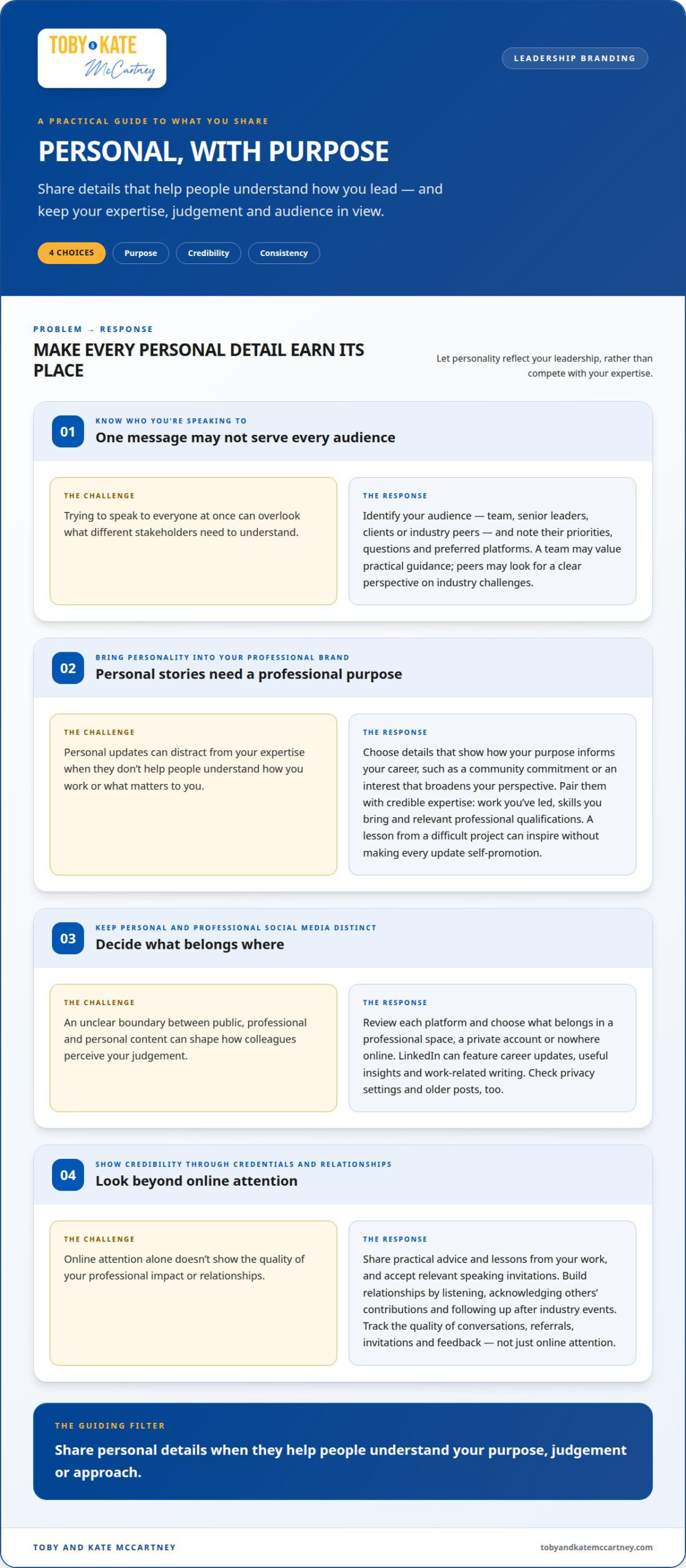
Share personal details when they help people understand your purpose, judgement or approach. Be intentional: let your personality reflect your leadership rather than compete with your expertise.
-
Understand your audience and stakeholders
Identify who needs to understand your work, such as your team, senior leaders, clients or industry peers. Note their priorities, questions and preferred platforms, then shape your message around what matters to them. Your team may value practical guidance, while peers may look for a clear perspective on industry challenges. Don’t try to speak to everyone at once.
-
Bring personality into your professional brand
Choose personal details that show how your purpose informs your career, such as a community commitment or an interest that broadens your perspective. Pair these with credible expertise: describe the work you’ve led, the skills you bring and relevant professional qualifications. Keep claims specific and accurate. A story about learning from a difficult project can inspire others without making every update self-promotion.
-
Keep personal and professional social media distinct
Review each platform and decide what belongs in a professional space, a private account or nowhere online. Your LinkedIn profile can feature career updates, useful insights and work-related writing; other platforms may suit a more personal audience. Check your privacy settings and older posts, remembering that your digital presence can shape how colleagues perceive your judgement.
-
Show credibility through credentials and relationships
Make your expertise visible by sharing practical advice, writing about lessons from your work, and accepting relevant speaking invitations. Build professional relationships by listening, acknowledging others’ contributions and following up after industry events. To measure impact, track the quality of conversations, referrals, invitations and feedback, not just online attention. If speaking is part of your next step, develop a more confident speaking presence through focused practice.
What Is Personal Branding?
Your personal brand is the reputation people form from your work, communication and online presence. To develop your personal brand as a leader, manage those signals deliberately: create a clear statement, share useful content and review whether your actions support your message.
- Write a concise leadership brand statement that explains who you help, how you contribute and what distinguishes your approach. For example: “I help teams navigate change through clear communication and practical coaching.” Keep your core message brief, then use it to guide introductions, profile summaries and career decisions. It should express your contribution, not capture your entire personality.
- Choose a digital presence that reflects your expertise and the people you want to reach. Update your LinkedIn profile with a clear headline, relevant skills and examples of work you’re proud of. Then publish useful content, such as an article explaining how you handled a project challenge. Make each post strengthen your reputation by offering insight, not merely announcing an achievement.
- Use AI tools to generate ideas, organise notes or test headlines, then add your own analysis and experience. For example, ask for questions readers might have about leading change, and answer them with lessons from your work. Check every claim, remove generic language and protect confidential details. The finished piece should reflect your judgement, not read like an automated summary.
- Build a brand management plan around clarity, consistency, content and communication. Choose the themes you’ll discuss, the platforms that suit your audience and a realistic publishing rhythm. Keep a record of planned articles, speaking opportunities and profile updates. Include professional development, such as a relevant course, when it strengthens the skills your brand represents.
- Review your plan against your career goals and the reputation you intend to build. Note which conversations, feedback or opportunities followed your content, then adjust your themes or presence accordingly. As you consider how to develop your personal brand as a leader, make sure your message evolves with your priorities. Consistency matters, but an outdated message won’t reflect the leader you’re becoming.
How personal branding and leadership reinforce each other
Your leadership brand is tested in daily decisions, not just polished profiles. Use these steps to make your influence authentic, purposeful and visible in the way your team works.
- Connect your message to leadership behaviours people can experience. If your purpose is to help teams succeed through change, explain the direction clearly, listen to concerns and act on useful feedback. Those actions make your stated values credible. Without them, a confident profile and your behaviour as a leader may tell different stories.
- Use your brand to guide decisions, not to attract attention. Before a difficult choice, ask which option supports your purpose, serves the team and advances the shared goal. For example, a leader who values openness can explain the reasons for a change, including what remains uncertain. This turns a personal principle into practical leadership.
- Adapt your influence to the people and situation. A team facing a complex deadline may need clear priorities, while a group developing a new idea may benefit from questions and room to contribute. Your style can change without losing its authentic core. Keep your purpose steady and tailor your response to the work at hand.
- Check how others experience your leadership. Ask a trusted colleague for a specific example of when your actions built confidence or created confusion. Compare their feedback with the reputation you intend to build, then choose one behaviour to strengthen. If you want to communicate your purpose more clearly, develop your leadership skills through focused leadership training.
Toby and Kate McCartney: NLP Practitioner Certification
Toby and Kate McCartney’s NLP Practitioner Certification can help leaders strengthen how they communicate and influence others. Once you’ve clarified the leadership brand you want to express, developing your communication skills can help you bring it into everyday conversations, team interactions and professional settings. Leadership training is another way to connect personal development with how you guide others at work.
Consider this next step if you’re ready to practise new approaches and build awareness of how you communicate. For further development, the NLP Master Practitioner Certification and Public Speaking programmes offer additional pathways, while NLP Trainer Training suits those looking to develop their training capability. Choose the pathway that fits your leadership goals, then contact Toby and Kate McCartney to discuss your next step.
Put your leadership brand into practice
Choose one behaviour that makes your leadership purpose visible. Put it into practice in a real conversation, decision or team meeting, then notice how people respond. Small, deliberate choices help your reputation grow from lived experience, not just the message you intend to communicate. As your role and ambitions evolve, keep shaping how to develop your personal brand as a leader around the contribution you want to make next.
If you want structured development to strengthen your communication and leadership presence, Toby and Kate McCartney offer NLP Practitioner Certification, NLP Master Practitioner Certification and Public Speaking programmes. Choose the pathway that best matches the skill you want to build, then take your next step at your own pace.
Contact Toby and Kate McCartney to explore your development options. Your leadership brand is built through what you practise next. Make that choice count.
Frequently Asked Questions
What is a personal brand for a leader, and why does it matter?
A leader’s personal brand is the reputation people form through their conduct, communication and professional presence. It matters because colleagues draw on those experiences when deciding whether to trust your judgement or seek your input. For example, if you’re known for explaining difficult decisions clearly, teams may turn to you during periods of change. Your brand is the impression your leadership makes in practice.
What steps help create a clear leadership brand statement and message?
Start with a real situation where your contribution made a difference, then describe the capability you used and who benefited. For example: “I help new managers handle challenging conversations with confidence.” Ask a colleague whether that description matches their experience of working with you. Revise any claim that feels inflated or unclear, then use the clearest version in introductions, meeting biographies and professional profiles.
How can you build a consistent personal brand on LinkedIn and other professional platforms?
Use the same core message across platforms, adapting the format to each audience. On LinkedIn, you might share a considered post about a lesson from a project; in a professional group, you could answer a colleague’s question with a practical example. Keep your profile headline, biography and contributions aligned. Before publishing, check that your tone and claims reflect how you behave at work.
What are common risks and mistakes when developing a personal brand as a leader?
A common mistake is presenting an idealised persona that colleagues don’t recognise in meetings. Another is sharing achievements without explaining their relevance or acknowledging others’ contributions. Overposting can also dilute your message when every update focuses on a different theme. Before publishing, ask whether the content is accurate, useful to its audience and consistent with your conduct. Correct any mismatch rather than defending an image that doesn’t fit.
How should UK leaders manage their online reputation and privacy?
Search your name periodically and review the public profiles, photographs and posts associated with it. Check the audience and privacy settings on personal accounts, and avoid sharing confidential workplace information or identifying colleagues without their agreement. Separate personal opinions from organisational statements, especially when discussing work-related topics. If you find outdated information, update the profile or use the platform’s reporting controls where appropriate.