
A workplace change is rarely just a new process. Managing change in the workplace means helping people adapt when an organisation changes its culture, technology, structure, goals or major initiatives. The shift may be gradual or transformational, and clear communication helps employees understand what is changing and why.
If you’re responsible for people, you know a change plan is only part of the picture. Employees need a clear explanation of what the change means for them, space to raise concerns and support as they adapt. Getting these elements right can build understanding and encourage participation.
This article explains organisational change and how change management works, then explores how people and communication professionals can support employees through each stage. You’ll find practical ways to share information, listen to staff and make a transition more manageable.
Key Takeaways
- Recognise that organisational change can affect culture, technology, structure and goals, and may range from incremental adjustments to major transformation.
- Explain why change is happening, what it means for employees and how they can raise questions or concerns.
- Build change management around preparation, implementation and follow-through, then track how people adopt and use the change.
- People professionals can help employees adapt through listening, practical support, training and opportunities to shape aspects of the transition.
1. What is Organisational Change?
Organisational change is a shift in how a business works, from a revised team structure to new technology, culture or goals. It can be adaptive, with gradual adjustments to meet changing needs, or transformational, reshaping the organisation’s direction and daily operations. Introducing new software, for example, may require updated processes and employee skills; a merger may affect reporting lines, roles and workplace culture. Both benefit from managing change in the workplace, because success takes more than announcing a decision.
Internal drivers include leadership priorities, performance challenges and the need to develop new skills. External drivers include customer expectations, market changes and advances in technology. A business might respond to customer demand by moving services online, then train employees to use digital systems and support customers through new channels. Digital transformation is more than installing technology: it can change responsibilities, workflows and how teams collaborate. Managers can map affected roles and processes, identify the capabilities employees need, and plan support accordingly.
Some changes improve one process; others reshape the organisation. An adaptive change might refine a handover between teams, while a transformational change could restructure departments or introduce a different business model. The scale and reach of a change should guide preparation: identify affected groups, explain the reason and intended outcomes, and give employees opportunities to raise practical concerns. This helps leaders assess whether the proposal meets business needs and where implementation could create friction.
For redundancy or restructuring, managers can explain the proposal, identify affected roles, listen to employees and communicate how decisions will be made. UK employers must obtain an employee’s agreement before changing their existing terms and conditions; if an employee refuses a proposed change, employers should proceed carefully and have strong, justifiable reasons for next steps. For a valid employee request under the relevant information and consultation rules, the threshold is at least 2% of employees, with a minimum of 15 employees and maximum of 2,500 employees, according to The National Archives. Thoughtful planning gives people clearer information and helps organisations pursue development without losing sight of the employees experiencing the change.
2. Transparent communication and regular meetings
Plan communication before announcing a workplace change. Identify affected employees and stakeholder groups, then explain clearly why change is needed now, what it aims to achieve and how roles or routines may be affected. Be honest about benefits and trade-offs. A new digital system, for example, may simplify reporting but require employees to learn different workflows. Give people a named contact and a clear way to ask questions.
UK employers must obtain an employee’s agreement before changing their existing terms and conditions. The Information and Consultation of Employees Regulations also provide a framework for employee consultation; the request thresholds were outlined in the previous section. If someone refuses a proposed change to their terms, employers should proceed carefully and have strong, justifiable reasons for any next steps. Keeping clear records of proposals, feedback and responses helps leadership communicate consistently.
Involve employees before decisions are final. Meet affected groups to explain the proposal, invite concerns and gather ideas about implementation. Employee-led committees can shape practical details, while anonymous feedback forms give people a private way to speak up. Leaders should show how feedback affects decisions or explain why a suggestion cannot be adopted. A visible response helps build trust through the transition.
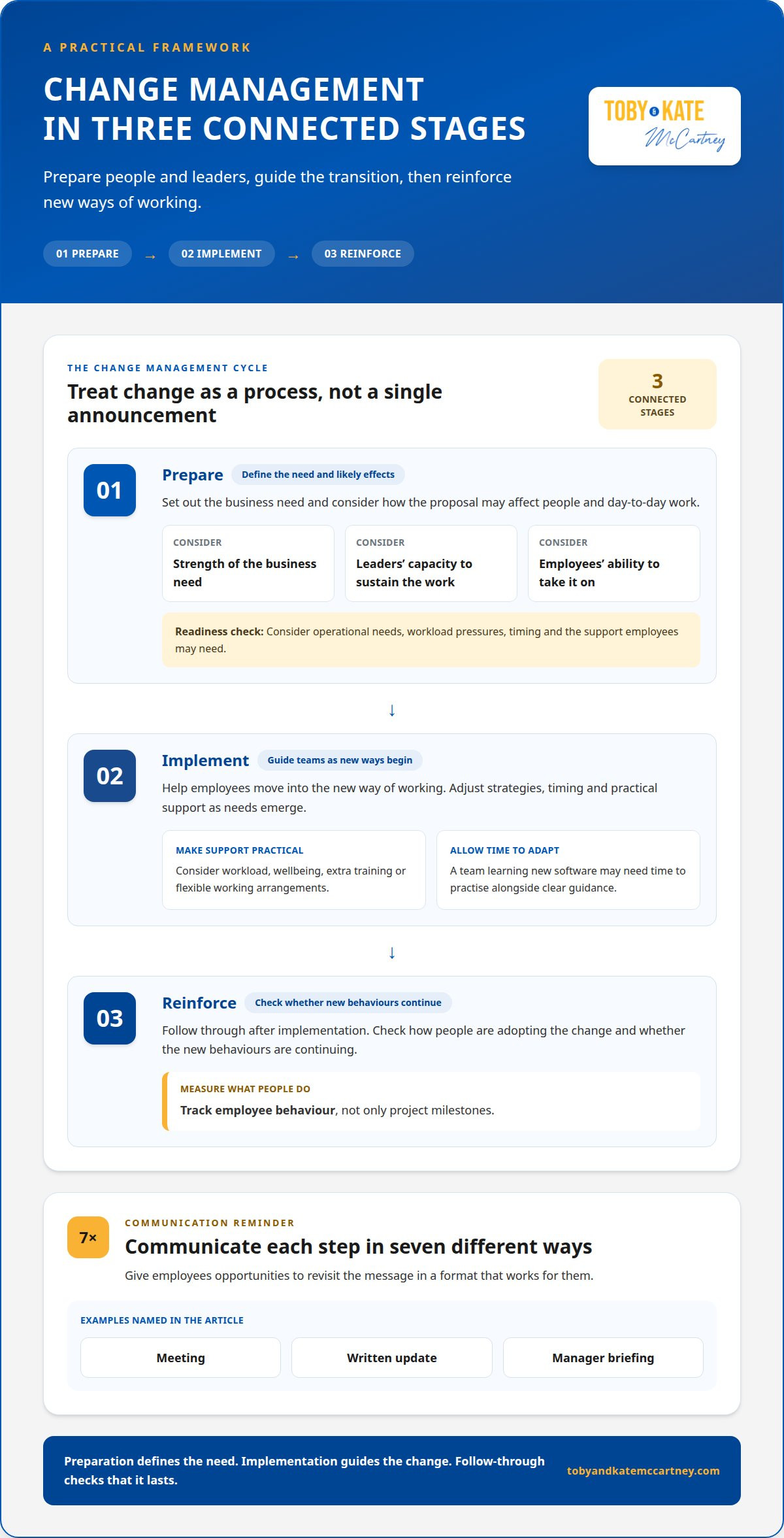
Communicate regularly and at the right time. Use team meetings to report progress, clarify what has changed and outline upcoming steps. Live question-and-answer sessions let employees raise issues directly with leaders. Communicate each step in seven different ways, such as through a meeting, written update and manager briefing, so people can revisit the message in a format that works for them. Pulse surveys can help leaders track sentiment and spot concerns that need attention.
Support means more than sharing updates. Managers should listen actively, acknowledge concerns and consider workload, wellbeing, extra training or flexible working arrangements. For example, a team learning new software may need time to practise alongside clear guidance. Leaders who want to strengthen these communication and people skills can explore leadership training as a practical development pathway.
3. What Is Change Management?
Change management is the structured work that helps people adopt an organisational change and apply it in practice. It involves three connected stages: prepare people and leaders, implement the change, then reinforce it. Each stage has a distinct purpose. Preparation defines the business need and likely effects; implementation guides teams as new ways of working begin; follow-through checks whether those behaviours continue. Treating change as a process, rather than a single announcement, gives leaders opportunities to respond as needs emerge.
Before launch, assess whether the organisation can deliver the proposal effectively. Consider the strength of the business need, leaders’ capacity to sustain the work, and employees’ ability to take it on. Before changing shift patterns, for example, managers can examine operational needs, discuss the impact with affected teams and identify workload pressures. This assessment helps leaders choose practical strategies, adjust timing and decide what support employees need. If teams are already stretched, adding a process without addressing capacity may undermine performance and engagement.
Measure outcomes at the level of employee behaviour, not only project milestones. Track how quickly people adopt the change, how many use it and how well they perform with it. A new customer handover process, for instance, needs more than a launch date: managers can monitor whether teams use the agreed steps and whether handovers meet the intended standard. Reinforcement matters too. Prosci research reports that 81% of participants who planned for reinforcement met or exceeded project objectives, compared with 15% who did not plan for it.
Poorly managed organisational change can harm performance and employee engagement, while creating unmanageable job stress. Build follow-through into the plan with manager check-ins, targeted coaching and recognition of progress. Prosci Best Practices in Change Management research reports that initiatives with excellent change management are 7X more likely to meet objectives than initiatives with poor change management. These findings underline the value of a clear internal process: prepare, support adoption, measure results and reinforce the practices that help employees achieve the intended outcome.
4. People professionals’ role in change management
People professionals connect the organisation’s change plan with employees’ day-to-day experience. They can map affected roles, identify skills gaps and advise leaders where implementation may disrupt workloads. For a new customer system, they might coordinate role-specific learning before launch and gather feedback from teams using it. Their insight helps leaders spot barriers early instead of treating employee concerns as resistance.
Involvement needs to be practical, not symbolic. People professionals can set up an employee-led committee to review proposed working arrangements, test guidance and provide feedback on implementation. They can also offer meaningful ways to contribute, such as inviting staff to shape team procedures or suggest ideas for a transition plan. When leaders explain which suggestions they adopt, employees can see how their input affects decisions.
Support should fit the change and each person’s needs. A colleague moving to a new role may benefit from mentoring, a flexible transition period or targeted skills training. Teams adopting new technology might need hands-on workshops, step-by-step guides and on-demand learning. People professionals can work with managers to identify who needs each resource, then review whether employees can apply what they have learnt in their daily work.
Wellbeing and capacity need attention throughout implementation. People professionals can help managers prioritise essential tasks, address workload pressures and consider support such as hybrid working, health benefits or an employee assistance programme. Regular check-ins with a team facing overlapping changes, for example, can surface fatigue before it affects delivery. Those leading the transition need support too: managers need clear responsibilities and time to respond to their teams.
Finally, people professionals can help sustain progress after launch. Change ambassadors can mentor colleagues, while managers recognise milestones and individual contributions. This turns implementation into continued learning, rather than a one-off announcement. If you’re ready to strengthen the leadership skills that support people through change, develop your people-change capability.
Toby and Kate McCartney
Toby and Kate McCartney can help you strengthen the communication and leadership skills needed to guide people through organisational change. Their leadership training and mentoring support leaders who want to listen well, explain decisions clearly and guide teams through new ways of working. These skills matter when employees need clarity, space to raise concerns and practical direction during a transition.
Professionals looking to develop their communication skills further can explore NLP Practitioner Certification, NLP Master Practitioner Certification, public speaking programmes and NLP Trainer Training. The right next step depends on the skills you want to build and how you plan to use them at work. To discuss your development goals, contact Toby and Kate McCartney.
Make your next change a better-led one
The next organisational change is an opportunity to develop how you lead, not just deliver a new process. As you plan, consider how your communication style shapes trust, how you respond to difficult concerns, and what support will help people act with confidence. These choices make managing change in the workplace a leadership capability you can strengthen over time.
Choose one practical action: make space for honest conversations, explain the purpose of a decision more clearly, or help a colleague develop the skills needed for a new responsibility. Small, deliberate shifts in how you lead can influence how people experience change.
If you’re ready to develop your approach and lead with greater clarity, contact Toby and Kate McCartney. Take the next step with confidence and make your leadership count.
Frequently Asked Questions
What is Organisational Change?
Organisational change is a shift in how a business is arranged or operates. It may affect one team, such as moving customer enquiries to a central service desk, or alter responsibilities across the organisation. The key distinction is its reach: managers need to understand which roles, routines and working relationships will change before deciding how to support the people affected.
What Is Change Management?
Change management is the practical approach that helps an organisation and its people move from current arrangements to a new way of working. If a business introduces a new approval process, for example, managers can explain how requests will be handled, help staff practise the steps and identify where delays occur. This connects the intended change to people’s daily actions.
What Positives Are There to Change at Work?
Well-planned change can clarify work, improve collaboration and help employees build useful capabilities. A revised handover, for example, may make ownership of customer requests easier to understand. A new role can also give an employee the chance to develop skills. Benefits depend on whether the change addresses a real need and whether people can put it into practice.
What does managing change in the workplace involve?
Change management connects organisational goals with their practical effects on employees. Managers clarify what will differ in someone’s role, identify the support needed and make space for staff to raise issues as the change unfolds. If responsibilities move between departments, for instance, agreeing who owns each task can prevent work being missed or duplicated during the transition.
What are the key steps in a workplace change management process?
Start by defining the business reason for the change and the outcome it should achieve. Then identify affected teams, responsibilities and possible obstacles. Prepare leaders and employees with relevant information and learning, and introduce the new arrangements with clear ownership. After launch, review how the change works in practice, address gaps and reinforce useful behaviours so the new approach becomes part of everyday work.
How can managers communicate workplace changes effectively to employees?
Make each message specific to its audience. Explain what will change in their work, what will stay the same and what action they need to take next. A team taking on new reporting responsibilities, for example, needs to know who completes each report and where to find instructions. Managers should also make it easy for employees to raise questions privately or in team discussions.